
Places to Visit in Mauritius
Blue Bay Marine Park
A protected lagoon of exceptional clarity, sheltering dozens of coral species and one of the oldest corals in the Indian Ocean.
Location
Blue Bay, near Mahébourg — south-east coast
Time Needed
2 – 3 hours
Beach Access
Free — public beach
Boat Trips
Paid, through licensed local operators
Protected Since
National park 1997, Ramsar site 2008
Best For
Snorkelling, marine life, calm swimming
Overview
Discover Blue Bay Marine Park
Blue Bay is the most protected piece of water in Mauritius, and it shows. The bay was declared a marine national park in 1997 and recognised as a Wetland of International Importance under the Ramsar Convention in 2008, covering roughly 353 hectares of lagoon, reef, seagrass and mangrove.
That protection has paid off underwater. Surveys have recorded around 38 coral species and some 72 species of fish inside the park, along with green turtles that feed on the seagrass meadows. The lagoon is shallow, sheltered and unusually clear, which is why it is regularly named the best easy-access snorkelling site on the island.
Its most celebrated resident is a single enormous brain coral, several metres across and estimated to be over a thousand years old. Corals of this type grow only millimetres a year, which gives some sense of how long it has been sitting there — and why the rules about not touching or standing on coral matter so much here.

A protected lagoon
of international importance
Why Visit
Why Visit Blue Bay?

The Best Easy Snorkelling
Shallow, sheltered and exceptionally clear — you do not need to be a strong swimmer or a diver to see a great deal here.

A Genuinely Protected Reef
National park status since 1997 and Ramsar recognition since 2008 mean the coral here has had real protection for decades.
A Thousand-Year-Old Coral
The park's giant brain coral, several metres across, is thought to be among the largest and oldest of its kind in the Indian Ocean.

Glass-Bottom Boats
For anyone who would rather stay dry, licensed operators run short trips over the reef with viewing panels in the hull.
MauTravel Experiences
Explore More of This Coast
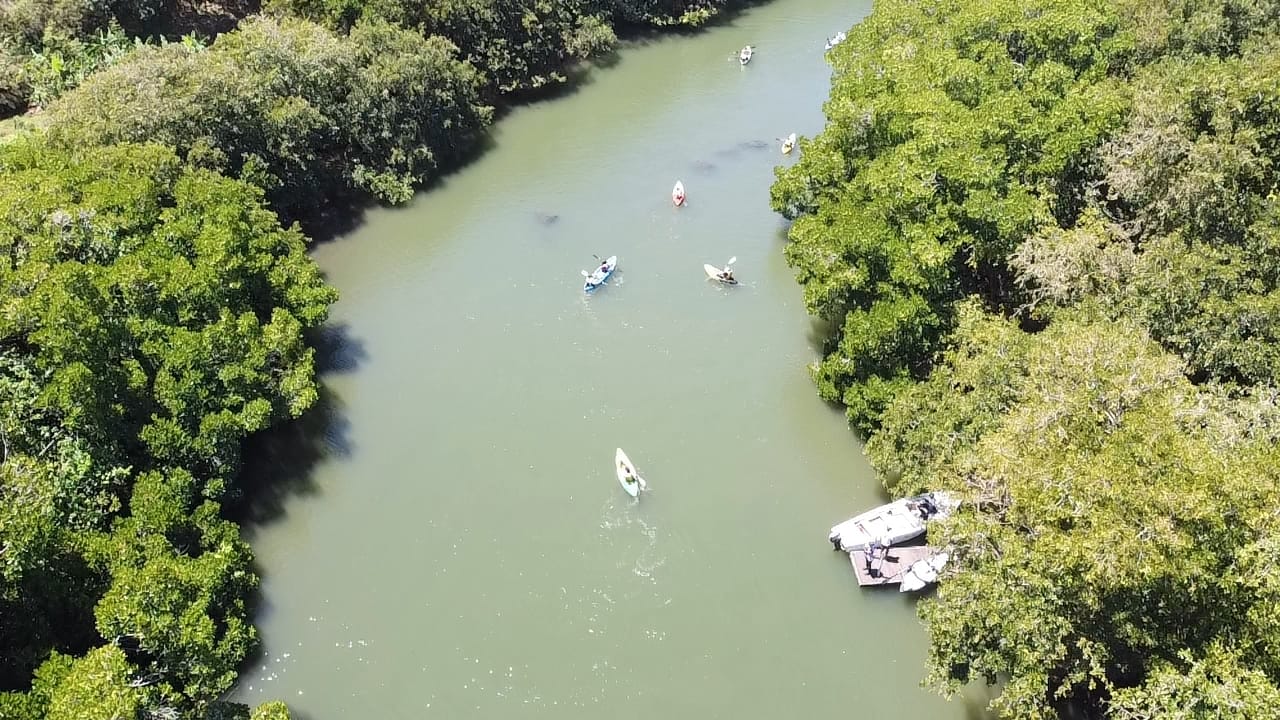
Blue Bay's protected lagoon and mangroves connect to two of our calmest water experiences.

Things to Do
Things to Do at Blue Bay
Snorkel the Reef
The main draw. Coral heads, reef fish and clear shallow water, all within a sheltered lagoon that rarely gets rough.
Take a Glass-Bottom Boat Trip
Short trips run by licensed local operators pass over the coral gardens, usually with a snorkelling stop included for those who want it.

Swim from the Public Beach
Blue Bay's public beach is small but pretty, with calm, shallow water and casuarina shade behind the sand.
Look for Green Turtles
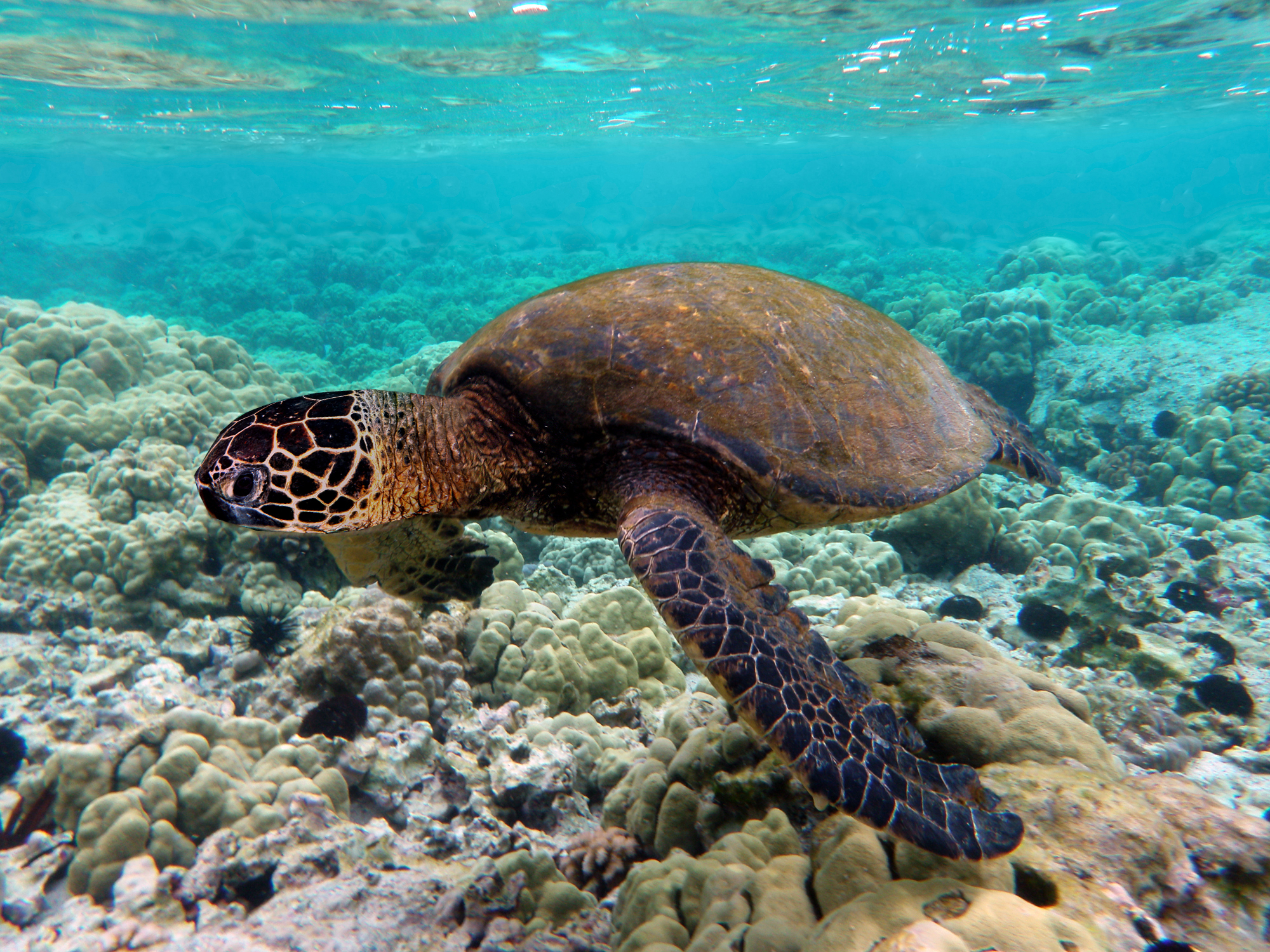
Turtles feed on the seagrass beds inside the park. Sightings are a matter of luck, and boat crews know the likelier spots.
Watch the Reef from Above
On a calm day the water is clear enough that a good deal of the coral structure is visible from the boat without entering the water at all.
Underwater
What Lives in the Park
Blue Bay is a protected reserve, not an aquarium. Look, photograph and keep your distance — never touch, chase or stand on coral or marine life.
The Giant Brain Coral
A single coral several metres across, estimated at more than a thousand years old and growing only millimetres each year.
Signature SightReef Fish
Around 72 fish species have been recorded in the park, from parrotfish and sergeant majors to butterflyfish over the coral heads.
AbundantGreen Turtles
An endangered species that grazes the park's seagrass meadows. Sightings happen, but are never guaranteed.
Occasional
Seagrass and Mangrove
The less glamorous parts of the park — and the reason so many juvenile fish survive to adulthood here.
Nursery HabitatVisiting Blue Bay Marine Park
The public beach at Blue Bay is free to access, with parking, shade and somewhere to buy refreshments. Swimming and snorkelling from the beach cost nothing.
Boat trips over the reef are operated by licensed local boat owners rather than by the park itself, and prices are agreed directly with them. Trips typically last around an hour and often include a snorkelling stop. Prices and departure times vary by operator and season.
Because this is a protected marine park, there are rules: no anchoring on coral, no collecting shells or coral, no fishing in the protected zone and no touching or standing on the reef. Boat operators working here are expected to follow them, and so are visitors.
Current information may change — confirm boat trip prices, departure times and conditions locally before booking.
Travel Tips
Before You Go
- Never touch, stand on or break coral — much of it grows only millimetres a year
- Do not collect shells, coral or anything else from the protected zone
- Use reef-safe sun cream, or cover up with a rash vest instead
- Do not feed the fish or chase turtles; keep a respectful distance from all marine life
- Agree the price and duration with a boat operator before departing
- Calm, clear mornings generally give the best visibility for snorkelling
- Bring water shoes — parts of the shallows are rocky underfoot
- Confirm that life jackets are available if anyone in your group is a weak swimmer
- Take all rubbish away with you; this is a Ramsar-listed wetland
Conservation
Why the Protection Matters
Blue Bay was declared a marine national park in 1997 and designated a Wetland of International Importance under the Ramsar Convention in 2008 — a recognition given only to sites of genuine global significance.
The park's value lies in how its habitats work together. Mangroves and seagrass meadows act as a nursery for juvenile fish, which then populate the coral reef; the reef in turn shelters the lagoon and the shoreline behind it. Damage to any one part weakens the others.
Corals are slow. The park's famous brain coral has taken over a thousand years to reach its size, growing a few millimetres annually. A single careless footstep can undo decades of that growth — which is why the no-touching rule is not a formality.
Getting There
Need Transport to Blue Bay Marine Park?
Enjoy the journey at your own pace with private transportation arranged by MauTravel. Hotel pickup and drop-off can be arranged from locations around Mauritius.
Continue Exploring
Explore East Mauritius
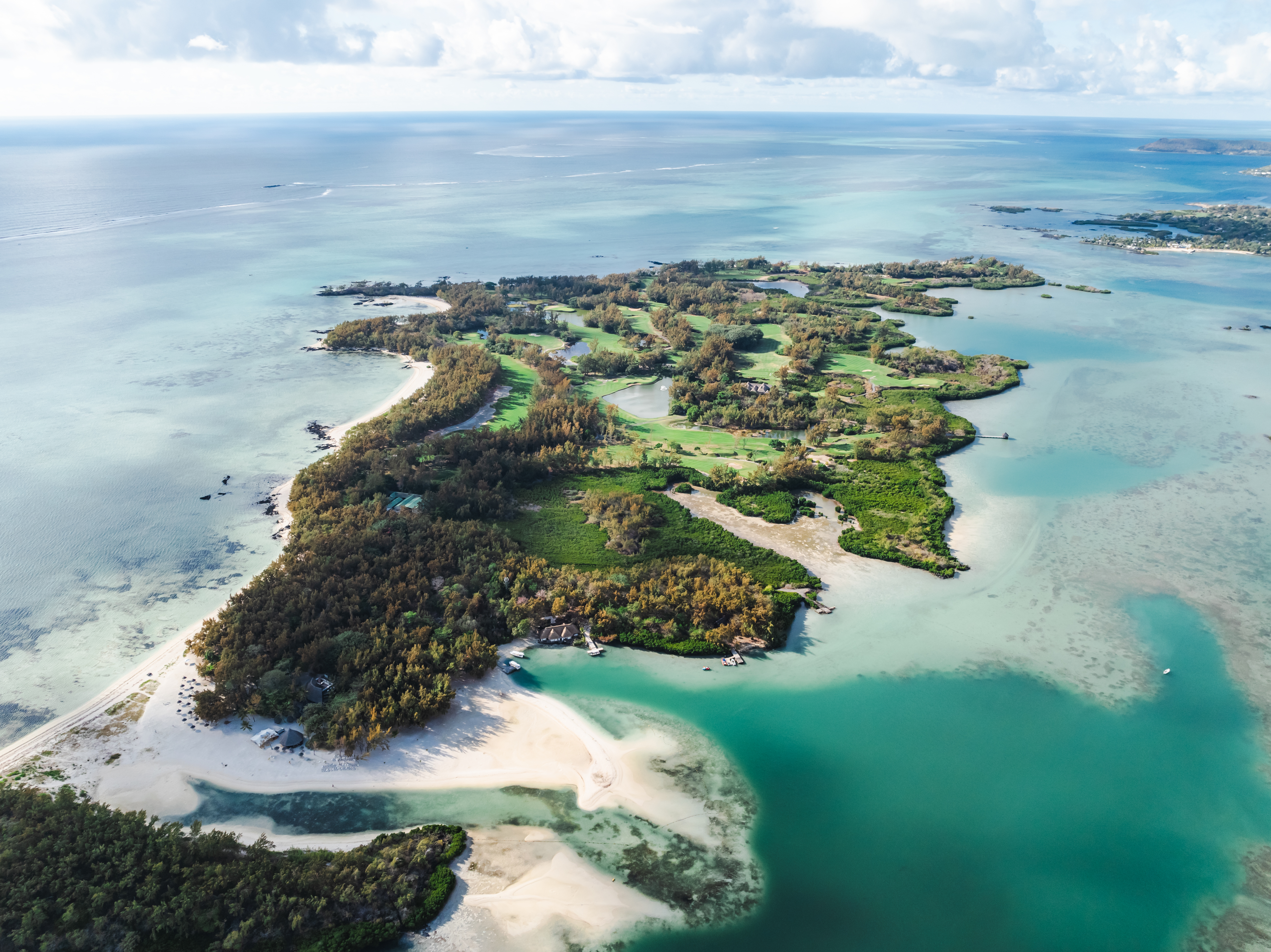
Blue Bay sits alongside the island's richest cluster of south-east attractions.



FAQ
Frequently Asked Questions
There is no charge to use the public beach or to swim and snorkel from it. Boat trips over the reef are run by licensed local operators and are paid for directly with them; prices vary, so agree them before departing.
Not necessarily. The lagoon is shallow and sheltered, which makes it one of the more forgiving snorkelling sites in Mauritius. If you are not a confident swimmer, ask your boat operator for a life jacket — they are commonly available.
Typically around an hour, cruising slowly over the coral gardens with viewing panels set into the hull, and usually with an optional snorkelling stop. It is a good option for anyone who wants to see the reef without getting in the water.
Green turtles do feed on the seagrass inside the park, but sightings are never guaranteed. Boat crews know where they are most often seen. Please never chase, touch or attempt to ride marine life.
A single coral colony several metres in diameter, estimated to be more than a thousand years old — thought to be among the largest of its kind in the Indian Ocean. Because it grows only millimetres each year, it is extremely vulnerable to physical damage.
Do not touch, stand on or break coral; do not collect shells or coral; do not fish in the protected zone; and do not feed marine life. Reef-safe sun cream, or a rash vest instead of sun cream, makes a real difference here.
Calm mornings usually offer the clearest water, before the wind picks up. Visibility can drop after heavy rain or on windy days.
Ready When You Are
See the Reef the Right Way
Blue Bay, Mahébourg and Île aux Aigrettes sit close together — an easy, well-paced day in the south-east with a private MauTravel driver.